For weeks now, there have been murmurings of discontent from many quarters regarding the governments Three Waters proposal. It started around the time that Westland Mayor, Bruce Smith released a video on 24 July setting out the reasons for his displeasure and committing not to support the reform before seeking a mandate from his ratepayers. The concerns have continued and are spreading as fast as an Australian bushfire. It’s been reported that 63 councils of the 67 in New Zealand have now indicated that they do not support the proposal or that further information is needed to allow them to consult with their ratepayers.
The Hon Nanaia Mahuta, Minister for Local Government when asked by Barbara Kuriger (National MP for Taranaki) in the House on 23 September 2021, “if she would pause or halt the three waters reforms given Local Government New Zealand and numerous mayors, councils, and communities across the country have called for her to do so, and, if not, why not?”
The Minister responded with a clear message saying “No. Pausing the conversation around the reform agenda will not change the scale, size, or complexity of the challenge confronting councils. We’ve provided evidence and research that shows that the looming costs facing councils will be unbearable by ratepayers. We’ve also highlighted the need for councils to consider this seriously, because once Taumata Arowai is stood up, higher drinking-water standards and environmental standards are enforced, the several councils that are operating their waste-water treatment plants on expired consents will significantly bear the load of infrastructure investment”.
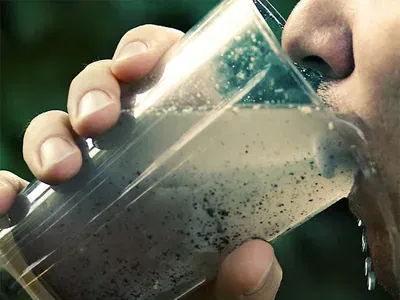
This indicates that regardless of almost a unanimous response from Councils (including Auckland Council), the Three Water reforms will still go ahead. It raises the question as to what is driving this? Further ammunition can be found in the slick $3m TV advertising campaign promoting the reforms, portraying a view that New Zealand has a water quality issue. However, The Ministry of Health’s own report the quality for drinking water shows a 96.7% pass rate across the country.
At a local level, TCDC results are poor. Of the 11 districts tested in TCDC, not a single supply fully passed the testing for compliance to the Health Act (5 of 11 passed), Bacteria (1 of 11), Protozoal (1 of 11) and Chemical (11 of 11). Bacterial measures are in place to determine the effectiveness of processes to test for bacteria such as Campylobacter and Salmonella in water. Several factors are looked at such as frequency of tests and the disinfection processes in place. The test for Protozoal measures Cryptosporidium in the source water and assesses the efficiency of the treatment plant in removing or inactivating Cryptosporidium. The results referred to above are found in the Annual Report in Drinking-Water quality found here
Coromandel’s CFM has had numerous interviews with people on the proposed reforms including Minister Mahuta. That interview can be found here https://soundcloud.com/coromandelscfm/nanaia-mahuta-three-waters-rex-20th-august-2021
In this interview the Minister states that the reforms are needed as the current system is just not efficient and that many territorial authorities will not be able to afford the upgrades needed to improve standards and to replace old equipment.
Councils have said that this has not been established and some have gone further saying that the claims are incorrect, that their standards are high and future upgrades are financially viable. They have asked for more information, but the Minister seems determined to press on with the reforms. This has been evidenced by Seek job advertisements for a multitude of highly paid positions now being advertised across New Zealand.
One local who passionately disagrees with the reforms is Benjamin Dunbar-Smith who’s holding public meetings around the Coromandel to advocate for support against the proposed reforms. Whilst he agrees changes are needed and water standards in some areas must improve, he strongly rejects the proposed reforms promoted in the Three Waters proposal. He goes further and says that if Minister Mahuta chooses to mandate this change, then this is an abrogation of the principle of democracy that councils are required under the Local Government Act to consult extensively with the public over the sale or transfer of major assets.
He has joined ACT and National with a Petition calling on the Minister to put a halt to the reforms while more information is provided, and councils can consult with ratepayers. National and ACT are both calling for the Three Waters reforms to be abandoned. National’s petition has so far obtained over 25,000 signatures.
At Saturdays Whitianga meeting, Benjamin Dunbar-Smith was joined by Hon Scott Simpson, MP for Coromandel and Dal Minogue, former Regional Councillor. In these Covid times, the meeting, held at the Mercury Bay Boating Club on Saturday was well attended by a capacity crowd of locals. He intends to hold a meeting in Tairua this Friday night and Whangamata on Saturday. Venues and times yet to be advised.
Clearly these changes are significant for local government. The sizable assets paid for by ratepayers would be moved from local councils to one of four new entities with 50% governance control provided by representatives from Councils and the other 50% by appointees from local Iwi,
What is alarming in these proposals has been the lack of detailed information together with the speed in which it is being rolled out. The proposed changes also raise questions of what role local councils will play if these assets and specifically the responsibility for managing them is removed. So far Government have been silent on this topic.
This week CFM will hold a further series of interviews with various parties on the proposed reforms. If you have questions or comments, please leave them at the bottom of this post. We will also advise further on locations and times for the meetings referred to above.