
By Justin Tuburan
Hundreds of thousands of Hauraki Gulf fishers could see their work impacted after next month’s election.
Over 220,000 recreational fishers use the waters as well as commercial operations, with changes to marine management, protected areas and industrial fishing methods being proposed by National, ACT, Labour, the Greens, and Opportunity.
This has the potential to impact recreational and commercial operators from the Coromandel Peninsula, sitting in the middle of the marine range.
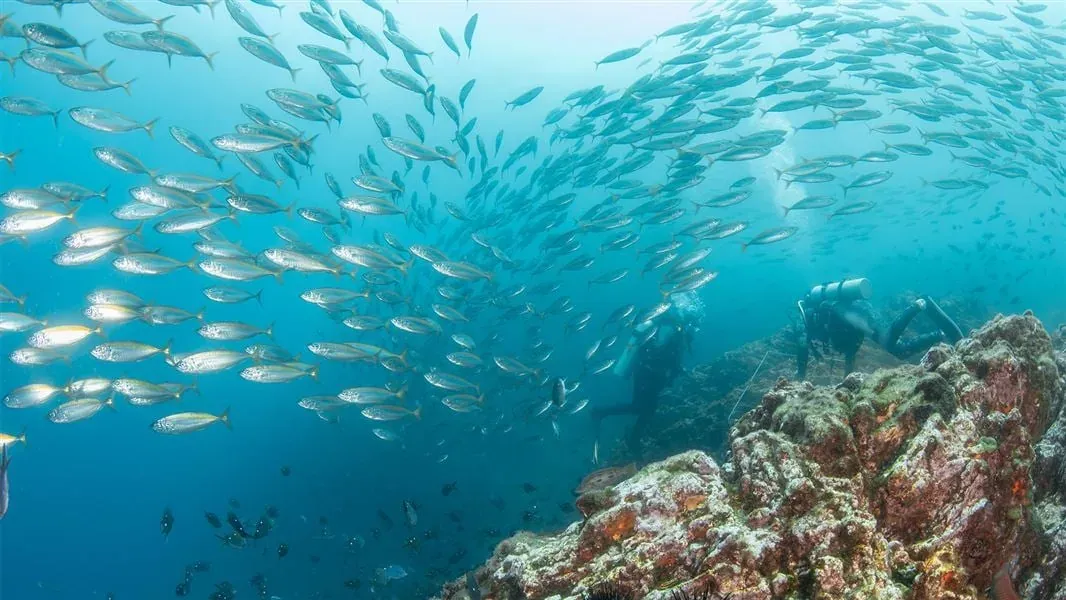
In 2000, the Hauraki Gulf became New Zealand’s first marine park, spanning 1.2 million hectares from Te Arai in the north to Waihi in the south, with Auckland’s Waitemata, the Firth of Thames and Aotea Great Barrier Island all in between.
According to ocean conservation group Live Ocean, the Gulf is one of the most diverse marine parks in the world, with over 25 percent of the Southern Hemisphere’s marine animals being spotted in the region, and visited by over 20 percent of the world’s seabird species.
After the introduction of the Hauraki Gulf/Tikapa Moana Protection Act in October 2025, the amount of area under protection zones tripled from 6 percent to 18 percent.
Much discourse over the election campaign has included whether to extend that protection to more of the region.
The Opportunity Party, a potential ‘kingmaker’ after November’s election, has stated any coalition discussion would have to include an immediate ban on bottom trawling in the Hauraki Gulf, with the practice being phased out around the country over time.
Bottom trawling is an industrial fishing method which drags weighted nets and steel ‘otter boards’ along the seabed to catch bottom-dwelling fish.
Data from the Ministry for Primary Industries shows the method is responsible for 68 percent of all fish by volume caught around the country.
It also states that 5 percent of New Zealand’s fishable area is trawled, with most occurring in previously trawled areas.
According to Greenpeace, the so-called ‘indiscriminate’ method of fishing is “one of the most destructive fishing methods” as its bycatch includes dolphins, turtles, seabirds and coral reefs since it targets diverse marine areas.
The group likens the method to underwater deforestation.
During last week’s 1News Leaders Debate, both major party leaders were asked if they supported the phasing out of bottom trawling, with Labour’s Chris Hipkins saying he supports the move.
National’s Christopher Luxon says he’s open to phasing out the practice, although he remains mindful of the $2 billion and 9000 jobs linked to the industry.
If Opportunity were to reach over 5 percent of the party vote, putting them in a kingmaker position, a ban on the method, at least in the Gulf, would seem a likely scenario.
Another commercial fishing method in the region which could see the chop is ring-net fishing, currently allowed in 2 of 12 of the Gulf’s High Protection Areas (HPAs), in the Rangitoto/Motutapu and Kawau HPAs.
The method wraps a net around schools of mid-water fish like mullet, kahawai and herring, with the practice accounting for 12.5 percent of catch by weight
The Greens and Labour are campaigning on the removal of the exemption, calling it a “carve out” in legislation which undermines the purpose of HPAs.
National is also campaigning on reversing the exemption which was included in the coalition government’s 2025 Hauraki Gulf Marine Protection Act.
In addition to this, National wants to extend the size of the Goat Island marine reserve and introduce a new reserve off Waiheke Island.
Their policy document also outlines a commitment to not introducing a recreational fishing license, and banning the commercial sale of marlin, a primarily recreational game fish.
The ACT Party falls short of promising bans on certain practices or extending protection zones however it wants to establish a specific Hauraki Gulf fisheries management area.
Currently, the region is managed within areas often larger than the Gulf itself and ACT says this policy would mean catch limits and stock management will be based on what’s happening inside the Gulf rather than averaged across a much larger area.
NZ First has not released policy specific to the Hauraki Gulf, however has voiced opposition to National’s proposals on banning ring-net fishing and a review into bottom trawling, with deputy leader Shane Jones saying it would cost “hundreds of millions of dollars of property rights being cancelled”.
He said any move to stop commercial fishing in the Gulf would make New Zealand no different to a communist country.